

Crossing The Border: Ecuador- Colombia.
Quick answer: Crossing the border between Ecuador and Colombia by public transport is simple: take a bus to Tulcan, a short taxi to the Rumichaca bridge, get stamped out of Ecuador and into Colombia, then take another taxi to Ipiales bus terminal. It is totally safe to cross at Tulcan–Ipiales during the day.
This post guides you through crossing the Ecuador–Colombia border on your own. The “Rumichaca” bridge links Tulcan (Ecuador) and Ipiales (Colombia), and both towns are easily reached from the major cities of their countries.
Bus to Tulcan
From Otavalo
My last stop in Ecuador was Otavalo, an indigenous town known for its weekend market and a popular choice among travellers. If you are crossing the border overland to Colombia from here, start a bit early so you arrive in Colombia by evening.
There are no direct buses to Tulcan from Otavalo’s bus terminal, so you will have to change buses at the terminal in Ibarra. Buses to Tulcan normally depart from the third platform in Ibarra – look for the sign above the platform.
Alternatively, you can flag down a direct bus from Quito to Tulcan on the Pan American Highway, which runs 1.5 kilometres outside Otavalo.
From Quito
There are direct buses to Tulcan from Quito’s Terminal Carcelen.
| Route | Travel time | Cost |
|---|---|---|
| Quito (Terminal Carcelen) – Tulcan | 5 hours | USD 5 |
| Otavalo – Ibarra | 45 minutes | around USD 0.35–0.55 |
| Ibarra – Tulcan | 3 hours | USD 3 |
Getting to the Ecuador–Colombia Border
The bus terminates at Tulcan’s terminal, which is 5 kilometres from the border. Taxis to the border wait outside the terminal and drop you right outside the Ecuadorian immigration office.
- Travel time: 10 minutes
- Cost: around USD 3–3.50
Once you have your exit stamp, just cross the Rumichaca bridge – the Colombian immigration office is straight ahead.
Rumichaca to Ipiales
The border is in a little town called Rumichaca, 4.5 kilometres from Ipiales. As you leave the immigration office, people will rush up offering to exchange your USD, so it is better to know the exchange rate beforehand.
Alternatively, you CAN pay for the taxi in USD and exchange your money at the bus terminal in Ipiales.
Taxis to Ipiales wait just outside the immigration office.
- Travel time: 10 minutes
- Cost: 9,500 COP (about USD 3.5 at the time of writing)
Making a Decision in Ipiales
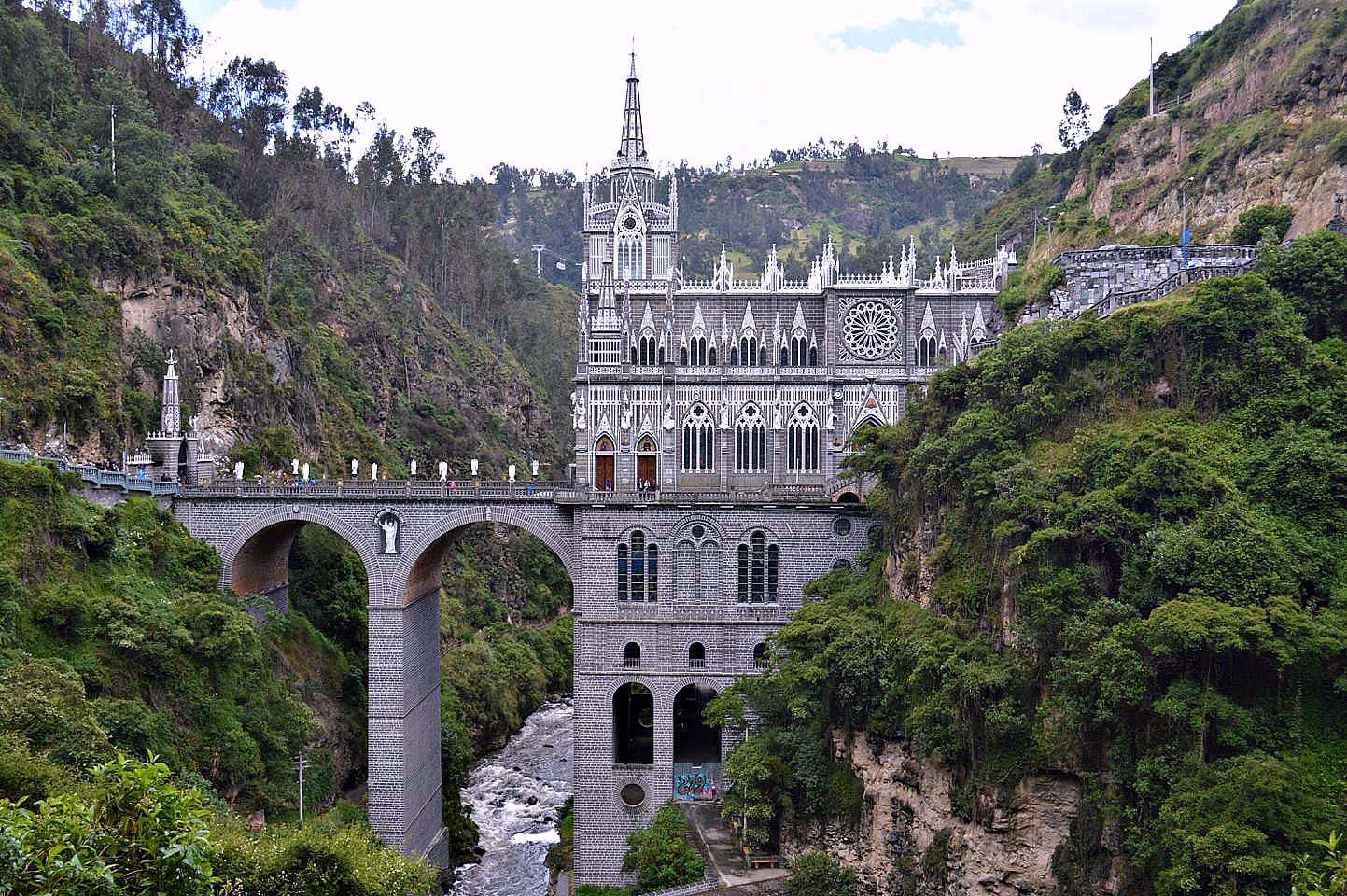
Ipiales’ bus terminal is well organised, with restaurants, mini markets and currency exchange inside. Many people stop in Ipiales to visit its prominent attraction, the “Sanctuary of Las Lajas”, an imposing work of architecture over the river.
- If you decide to spend a night in Ipiales, there are plenty of hostels and hotels around the bus terminal.
- If you decide to continue to Pasto, Popayan, Cali or Bogota, there is a regular bus service.
Ipiales to Pasto
Frequent buses serve this route – the smaller the bus, the more expensive it is.
- Travel time: 2 hours
- Cost: 8,000 COP (USD 2.5)
Ecuador to Colombia Border Crossing: Route Overview
- Bus from Otavalo to Ibarra | 45 minutes | around USD 0.35–0.55
- Bus from Ibarra to Tulcan | 3 hours | USD 3
- Taxi from Tulcan terminal to the border | 10 minutes | around USD 3–3.50
- Taxi from Rumichaca to Ipiales bus terminal | 10 minutes | USD 3.5
Frequently Asked Questions
Is it safe to cross the border between Ecuador and Colombia at Tulcan–Ipiales?
Yes, it is totally safe to cross during the day. Start early so you reach Colombia by evening.
Is there a direct bus from Otavalo to Tulcan?
Not from Otavalo’s terminal – change in Ibarra, or flag down a Quito–Tulcan bus on the Pan American Highway outside town.
Can I pay in US dollars on the Colombian side?
Yes, you can pay the taxi to Ipiales in USD and change money at Ipiales bus terminal.
How far is the border from Ipiales?
The Rumichaca border is 4.5 kilometres from Ipiales, about a 10-minute taxi ride.
Conclusion
Crossing the border from Ecuador to Colombia at Rumichaca takes just a few buses and taxis and costs little more than a handful of dollars. Know the exchange rate, travel in daylight, and you could be visiting Las Lajas or heading on to Pasto the same day.






Just a warning to anyone planning on crossing the boarder from Colombia into Ecuador. I just made the trip from Pasto to Quito yesterday and although I had no issues it could have been worse. The night before we started our journey to the boarder our hostel owner told us that it could take up to 10 hours to cross the boarder. Why? Because of the crisis happening in Venezuela hundreds of buses are coming in from Venezuela dropping people off to escape their country so there are hundred of people trying to get through a boarder with about 7 windows on each side to stamp your passport. My best advice would be to leave as early as possible. We left Pasto Colombia at 4:30 am got to the boarder around 7. The Colombian side there was no line and we waited about 10 minutes to get our exit stamps and then walk across the boarder. Once we got to the Ecuador side there was a pretty long line and we waited a little over an hour to get our passport stamped. When we walked out of the office the line has tripled and wrapped around the immigration building. So get there EARLY or you will be spending all day here. I hope this helps!
Thanks a lot for this update Morgan.
Thanks. I followed this guide and crossed the border yesterday. The bus from Otavalo to Ibarra is USD $0.55. Also, you can take a colectivo from the border to Ipiales for COP 1900.
Glad to know that this guide was helpful to you in crossing the border and thank you for updating the revised bus fare.
I had to pay $90 USD to cross into Columbia from Ecuador? We went by bus. Has anyone else paid this fee?
That’s quite a lot.
Did you get asked for proof of onward travel when crossing?
No Fran, they just stamped my passport and let me in.
I will be in Quito in a week and would love to swing on up there to see la Lajas . Looks like it’s an overnighter. Anyone tried this and have advise?
This is some great info! The last time I decided to fly but it looks like border crossing is very easy and safe now. Thanks for sharing!
I always find crossing borders strangely fascinating. Especially if you are doing it on land. Have never been to the exotic locations of Ecuador and Colombia, but the mere mention of these names set the adrenaline coursing through my veins. Really very informative post about the border crossing process.
This way of crossing the border seems really economical. And there is always a feeling of excitement attached when you cross the borders by road. You have put up a good and to the point resource for someone planning to go ecuador to colombia.
This sure is a very useful post. It is not easy to get such information on border crossing and if someone has done it successfully then the experience shared helps. You have detailed it quite well
This overland border crossing is a great idea. The Sanctuary of Las Lajas is so impressive. We’d definitely take some extra time to explore it.
Being a border junkie, I am always excited to cross borders on road. Public Transport is my prefereed mode always. Ecuador and Colombia both are exciting destinations. It would be fun to cross them via road. This part of the world has always fascinated me.
YES I am dying to go Colombia and Ecuador and well all of South America and I was always curious how to get around and between close cities/borders. this is super detailed, thanks so much!
Great info. I’m hoping to return to South America soon, and will probably be crossing the Rumichaca!
Thanks for such great detail on how to cross the border. It can be scary and confusing crossing the border between countries if you don’t know what you are doing. Your information about routes, options, and time to cross will be helpful to travelers.
Thanks for this very helpful post. I crossed that border via air, and was surprised at the ultra-high security in the Bogota airport. I’ve travelled a lot, but have never seen such thorough security measures as I saw there. Everyone should be made aware of that.