

Guide To Visit Iguazu Falls.
Quick answer: To visit Iguazu Falls, base yourself in Puerto Iguazu (Argentina) or Foz do Iguaçu (Brazil), both reachable by long-distance bus or plane. Local buses run from each town to the national park entrance, and you can easily cross the border for a day trip to see the falls from both sides.
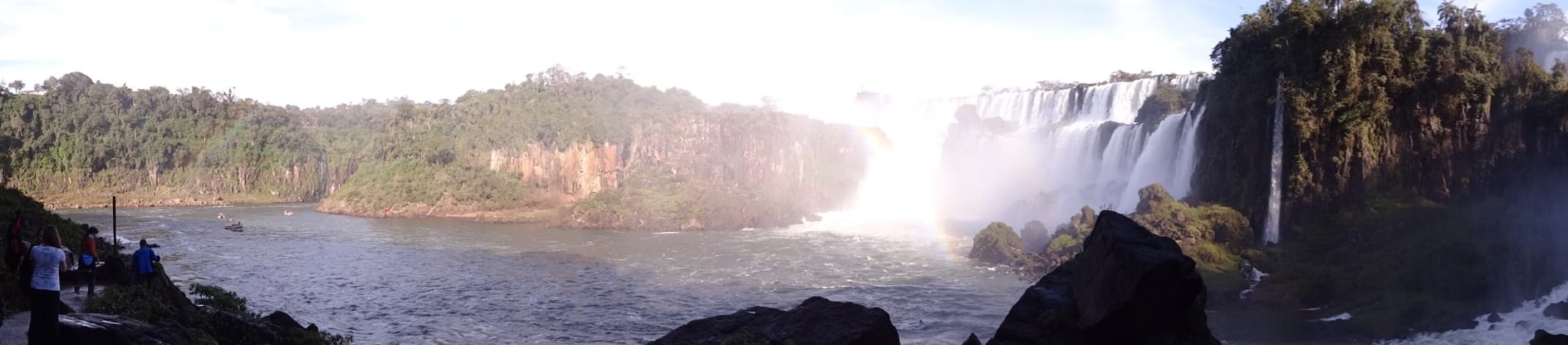
Iguazu, or Iguassu, is the largest waterfall system in the world. The falls lie on the Iguazu River, on the border between the Brazilian state of Paraná and the Argentinian province of Misiones.
With nearly 300 individual falls spread over three kilometres and set in the jungle, this World Heritage Site is a breathtaking natural phenomenon. It is unlike any other waterfall in the world and a must for your bucket list.
A Brief History of Iguazu Falls
The word Iguazu means “big water” or “great water”, a name given by the indigenous Guarani and Tupi people of Paraguay, Brazil and Argentina. The falls were discovered by the Spanish explorer Álvar Núñez Cabeza de Vaca in 1541, but a native legend explains their existence.
According to locals, a deity was engaged to a beautiful woman named Naipi, but she betrayed him by escaping with her mortal lover, Taroba, in a canoe on the Iguazu River. Blinded by rage, the deity sliced the river in half, creating the waterfalls and dooming the lovers.
Iguazu or Iguaçu?
Like some other major waterfalls, Iguazu forms a natural border, here between Brazil and Argentina. That explains the two spellings, each influenced by the town on its side of the falls:
- Puerto Iguazu – the town on the Argentinian side (Spanish)
- Foz do Iguaçu – the town on the Brazilian side (Portuguese)
Getting to Iguazu Falls
Argentinian Side (Puerto Iguazu)
By bus: Buses depart frequently from Buenos Aires and other major Argentinian cities to Puerto Iguazu. The 18-hour one-way journey from Buenos Aires costs around AR$1500. Click here to check schedules or book.
By air: Puerto Iguazu is served by Cataratas del Iguazú International Airport (IGR), with regular services from Buenos Aires (AEP/EZE), Rosario, Córdoba, Salta, Mendoza and El Calafate.
Brazilian Side (Foz do Iguaçu)
By bus: Long-distance buses arrive at the Terminal Rodoviária Internacional on Av Costa e Silva, about 3 km from the centre. An UneSul Executivo bus takes 14–16 hours from Porto Alegre.
By air: Foz do Iguaçu International Airport (IGU) has been served by Gol Transportes Aéreos, LATAM Airlines, Trip Airlines, Azul and Sol Linhas Aéreas, with direct flights to and from Lima (Peru), São Paulo (Guarulhos/Viracopos/Congonhas), Recife, Rio de Janeiro, Curitiba, Porto Alegre, Salvador, Cascavel, Londrina and more. Pluna Airlines of Uruguay has also flown direct from Montevideo. The airport sits just off the main road between Foz do Iguaçu and the entrance to Iguaçu National Park.
Where to Stay Near Iguazu Falls
- Argentinian side: Hostel 10 in Puerto Iguazu is centrally located, and a dorm bed costs around USD 5.94 including breakfast.
- Brazilian side: Made In Brazil hostel has beds from USD 7.94 and is a 10-minute walk from downtown.
Visiting Iguazu Falls
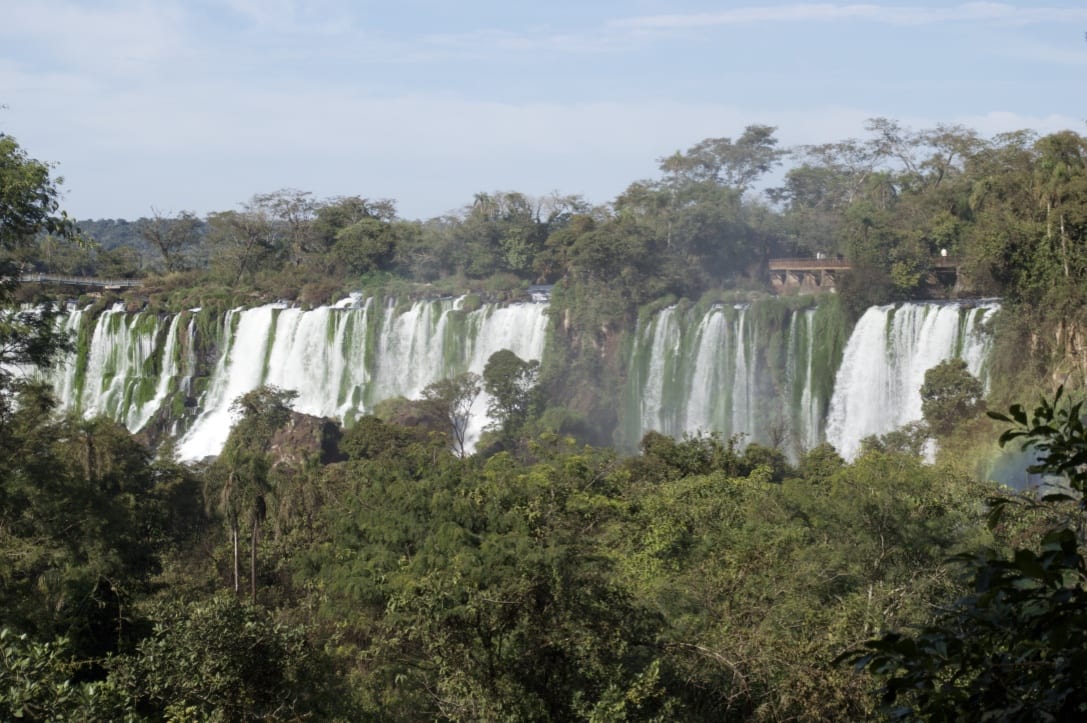
The Argentinian Side
From Puerto Iguazu’s main bus terminal (Terminal de Ómnibus), Rio Uruguay buses leave for the park entrance roughly every twenty minutes (07:00–20:50 daily). The fare is AR$100, with many stops in town and on the way to the falls.
The park entrance ticket costs AR$330 and is paid at the entrance; you need your original passport to enter. If you want to return the next day, you can get second-day entry at half price, provided you get your voucher stamped before leaving the park on the first day.
The Brazilian Side
Buses run every 22 minutes from the Terminal de Transporte Urbano (urban bus terminal) to the park entrance. Take bus No. 120 to “Parque Nacional”; the journey takes about 40 minutes. At R$3.20 (USD 1.1), it is a very cheap and easy way to reach the falls.
The entire Brazilian side can be seen in about 2–4 hours, depending on timing. The entrance ticket is R$57 (USD 18). It is better to pay in Brazilian reais or by credit/debit card, as the exchange rate with Argentinian pesos is poor.
Crossing Between Argentina and Brazil
Argentina to Brazil
A day trip from Puerto Iguazu to Brazil’s Iguaçu Falls National Park is recommended. Take a Rio Uruguay bus and make sure Foz do Iguaçu is shown on the front. Buses usually leave from Gate 7 or 9, and the trip costs AR$65 one way.
At Argentinian border control, everyone, including the driver, gets off for an exit stamp; it is safe to leave your baggage on the bus. The driver waits for everyone before continuing to the Brazilian side.
Brazil to Argentina
Buses to Puerto Iguazu leave every 30 minutes from Ponte da Amizade, and a one-way ride costs R$7 (USD 2.4).
What to See in Puerto Iguazu Town
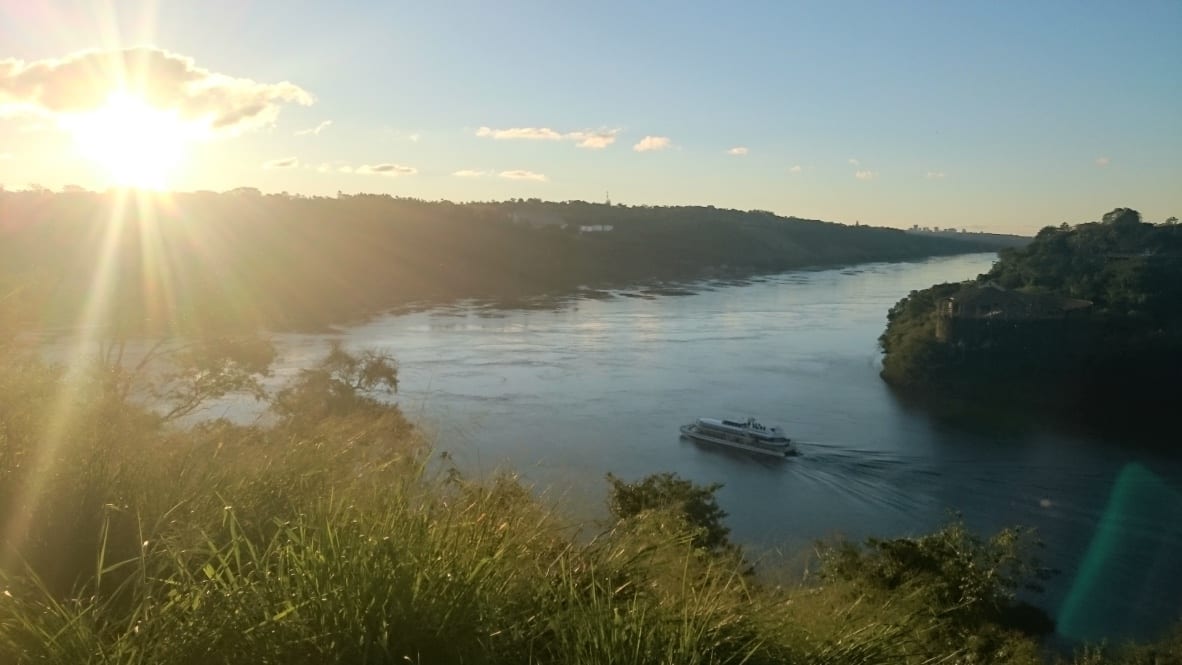
Three Frontiers Landmark (walk down Av. Tres Fronteras): see Argentina, Paraguay and Brazil in a single glimpse while freighters slowly make their way along the water.
Frequently Asked Questions
How long do you need on the Brazilian side of Iguazu Falls?
The entire Brazilian side can be seen in about 2–4 hours.
Do I need my passport to enter the Argentinian park?
Yes, an original passport is needed to enter the park on the Argentinian side.
Can I visit both sides of Iguazu Falls?
Yes. Buses run between Puerto Iguazu and Foz do Iguaçu, and a day trip across the border is recommended.
Is there a discount for a second day in the Argentinian park?
Yes. Get your voucher stamped before leaving on day one and you can re-enter the next day at half price.
Conclusion
This guide to visit Iguazu Falls shows how easy it is to see one of the world’s great natural wonders on a budget. Stay in Puerto Iguazu or Foz do Iguaçu, use the cheap local buses, and make time for both sides of the falls.








Fantastic view. They definitely look worth visiting. Love the tips you have shared to plan a visit. Not sure if I can get there anytime soon but if I do, I know where to come back and look up for information.
The Iguazu falls look amazing. The falls look like a giant water screen, and as you mentioned they serve as a natural border between Argentina and Brazil. This is really fascinating. The pictures too are brilliant and do justice to the beauty of the place.
Definitely on my bucket list! Out of curiosity, which side did you like better and why?
So majestic the falls are amongst the green, I’ve never seen anything like that! Definitely have to see it, thanks for posting the trip in such detail!
Iguazu (the Argentinean side) was the highlight of our 12 months travelling through Latin America.
A simply stunning natural wonder!
Nice photos. Iguazu Falls look beautiful. Do you need visas to cross back and forth across this border?
wow iguazu falls looks amazing. It’s always been somewhere ive wanted to visit, hopefully next year!
We are headed here soon. Will reference back to this for planning. Thanks.