
Cabo Polonio
Cabo Polonio is a tiny hamlet on Uruguay’s eastern coast, set between the South Atlantic Ocean and sand dunes, with no electricity, running water or sewerage, just a handful of cottages, a lighthouse and a sea lion colony. It is reached only on foot through the dunes or by 4×4, and it is undoubtedly one of the best places to disconnect and experience nirvana. Here is how I hitch-hiked there and what I found.
“No way!! A hamlet by the ocean?” was my first reaction when a fellow backpacker at a hostel in Punta Del Diablo told me about Cabo Polonio.
I instantly browsed through photos of the place, which I had already painted a picture of in my mind.

Hitch-Hiking to Cabo Polonio
The next morning I was standing on Route 9 with my backpack on my shoulders. Raising my thumb with fading hope of a ride to Cabo Polonio, I felt it was a test of trust in the kindness of others, and an exercise in hope.
After more than 3 hours, a black hatchback pulled over. A scruffy-looking man with the nub of a cigarette leaned over and opened the door. Pulling on a spliff, he said, “Amigo, es legal fumar marihuana en Uruguay” (Friend, it’s legal to smoke marijuana in Uruguay).
He spoke no English, and my attempts at broken Spanish didn’t really mean a thing, but that drive made me realise “it’s not just language that connects people.”

What Is Cabo Polonio?
Cabo Polonio sits on the eastern coast of Uruguay. A smattering of holiday cottages on the sand dunes, without electricity, water or sewerage, makes it the perfect place to connect with nature. The tourism authorities call this hidden gem Cabo Polonio National Park.
How to Get to Cabo Polonio
- Distance: 7 km from the highway.
- On foot: Walk through the dunes.
- By 4×4: Usually 400 UYU return, but the low-season fare was 200 UYU when I went.

The Lighthouse and Sea Lions
The village is sandwiched between the South Atlantic Ocean and the dunes. One of its main attractions is the lighthouse, which gets power from the national grid and stands right opposite the part of the village that is home to a colony of sea lions.

Arriving in the Hamlet
After a jolting ride, the 4×4 pulled up at the “centre” of the hamlet, home to fewer than 100 people. Before I had even grabbed my backpack, I whipped out my camera to capture the magnificent sunset over the village. My first impression of Cabo Polonio left me astounded.

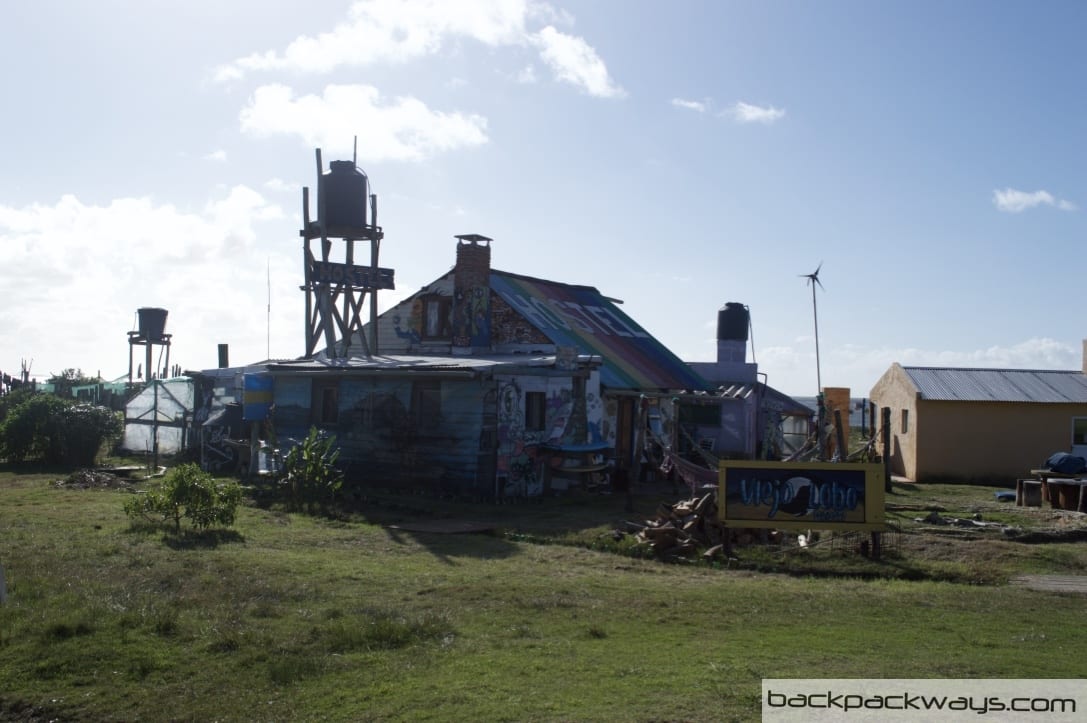
Life Off the Grid at Viejo Lobo Hostel
Mauro, the manager of Viejo Lobo Hostel, introduced me to the hamlet as we walked from the 4×4 stop:
“There is just this one shop in the entire village where villagers get their daily supplies, but we have our own farm in the backyard where we grow some vegetables. The hostel generates power with a windmill and gets water from wells. I am sure this will be a unique and unforgettable experience for you, Señor.”
I was welcomed by a German backpacker dressed like a hippie, deep in conversation with a Tobagonian and a Mexican about how he got his dreadlocks in Jamaica. He introduced himself as Max, and we got along from the very first moment.
Walking to Barra De Valizas
The next morning, as the dark clouds revealed the sun, Max and I walked to the nearby village of Barra De Valizas. The 2-hour walk was strenuous, with the wind blowing sand off the dunes, but the effort paid off when we reached the highest point and were rewarded with a panoramic view of the ocean and the village.
Our feet throbbed as we walked back to the hostel, but the mystical beauty of Cabo Polonio gave us no reason to groan.

A Night of Music and Medio y Medio
As darkness fell, Mauro served us home-made bread and stew for dinner, probably the best meal I had eaten in weeks. Max swept a plectrum across the strings of a guitar, I grabbed a rattle, and Nico, the Mexican, got his hands on a conga. The night grew even merrier when Mauro poured us some medio y medio (half dry white wine, half sparkling wine).
Frequently Asked Questions
How do you get to Cabo Polonio?
It is 7 km from the highway (Route 9). You can walk through the dunes or take a 4×4, which usually costs 400 UYU return (200 UYU in low season when I visited).
Does Cabo Polonio have electricity?
The village has no electricity, water or sewerage; only the lighthouse is on the national grid. My hostel used a windmill for power and wells for water.
What is there to do in Cabo Polonio?
Watch the sea lions near the lighthouse, enjoy the sunsets and walk the dunes to Barra De Valizas, about 2 hours away.
Conclusion
Cabo Polonio is proof that the best places are sometimes the hardest to reach. A 3-hour wait for a ride, a bumpy 4×4 across the dunes and a night of music by candlelight made it one of the most memorable stops of my trip through Uruguay.



The place looks peaceful and relaxing. I love the view of sea lions. Wow its a lot! I so love it 🙂
Seems like you had a wonderful time here in Cabo Polonio! Thanks for sharing your experience, I enjoyed the read.
At first I was like..hmmm. should I read it, then I your opening line is “a helmet in ocean”? that caught me! This place is stunning, I never heard of it nor been anywhere near there. But hopefully I’ll get there next year! 🙂
The blend of the land and sea views is just stunning. It looks so serene and free. I don’t care how ‘ghostly’ it may look but it’s just perfect to release some feelings. Haha
We never got to Cabo Polonio, however our time in Punta del Diablo sounds rather similar (we were there in the heart of winter, and it was like a ghost town, with us the only riff raff that had blown in).
You should point out that Marijuana is only legal for locals in Uruguay, not tourists 😉
It is a great little country though!!
This sounds a great place to get away, far from the maddening crowd and get lost in one’s own thoughts and the beauty of the Ocean. Sounds Magical!
Sounds like a wonderful place to disappear and reflect. Thanks for introducing it to us!
The line that captured me was, “the best place to experience Nirvana.” That immediately gave me a sense of what I was to experience if I found myself in Cabo Polonio. Thx for the great post.
“its not just language that connects people” I really like that. How wonderful is that view of the sea lions as well!
Thanks Mar Pages. Spotting those sea lions were undoubtedly the best of all I experienced in the hamlet.