
The Death Road Experience.
“You always have two choices, your commitment versus your fear”
That’s exactly what I felt the moment I decided to plunge down the world’s most dangerous road. The Death Road experience in Bolivia means mountain biking down the Yungas Road from La Cumbre to Coroico, a drop of 3,450 metres. With a good operator like Barracuda Biking, it’s one of the most thrilling days you can have in La Paz.
The Death Road, or Camino de la Muerte, earned its name from the packed buses, trucks and cyclists that have gone over the edge of its 2,000-foot cliffs, never to be seen again; it has been said that 200–300 people died on it every year. Mountain biking down 64 km of continuous downhill with only one short uphill section is a prominent attraction on the gringo trail in La Paz.
About the Death Road
The road was constructed in the 1930s during the Chaco War between Bolivia and Paraguay, and it is one of the few routes connecting the Yungas region of northern Bolivia to La Paz. The Yungas Road was built by the bare hands of thousands of war prisoners.
Sadly, many of the prisoners who built this road died, either of natural causes or in accidents. It is said that some workers were pushed off the edge for disobeying instructions, and locals believe the road is still cursed.

Choosing a Death Road tour operator
Choosing a quality operator will have a major impact on your experience. There are over a dozen operators running the tour, and yes, some offer cheap prices. But your life is worth all the money in the world, and this isn’t the place to save a few quid. The last thing you want is an inexperienced guide on the world’s most dangerous road, or your brakes failing mid-corner.
I searched for an agency that not only had a good safety record but was also affordable and reliable. After thorough research, I decided to overcome my fear with Barracuda Biking.

Why Barracuda Biking?
The next morning, after strolling through the Witches’ Market, I was in their office. The booking process was simple: they measured me for a helmet, jacket and gloves before I signed my life away. (I’m just kidding. Barracuda Biking is among the safest agencies offering tours down the Death Road.)
- Experienced guides: over six years of experience guiding on the Death Road, certified in first aid and rope rescue.
- Proper bikes: they are among the few agencies using Kona bikes with full suspension and hydraulic disc brakes.
- Good equipment and briefings: the gear was sturdy and the instructions very thorough.
- Budget-friendly: Barracuda caters to budget-conscious travellers without sacrificing safety.
We also had a really fun group to ride with, which made the tour even more enjoyable.

The day of the tour
We met near the Cathedral in the main square at 7 am, where a minibus was waiting for our group of eight thrill seekers.
Just as we were leaving La Paz, a voice came over the radio: a strike had broken out and the roads were blocked with stones. It seemed impossible to continue, and our excitement began to drop. But our guide was determined to get us to the Yungas, and shortly we found our bus driving off the road across rough terrain. Unsurprisingly, buses from other agencies followed us.
That ride itself was nerve-racking, with a steep cliff on one side of a road too narrow for a vehicle to pass comfortably. Driving along dusty, winding paths, we finally got past the blockade and were on our way to bike down the perilous road, adrenaline rushing through our bodies.
At La Cumbre we were given our bikes, helmets, gloves, trousers and windbreaker jackets. Each bike was adjusted to our size and our preferred front brake side, left or right.


The Death Road route
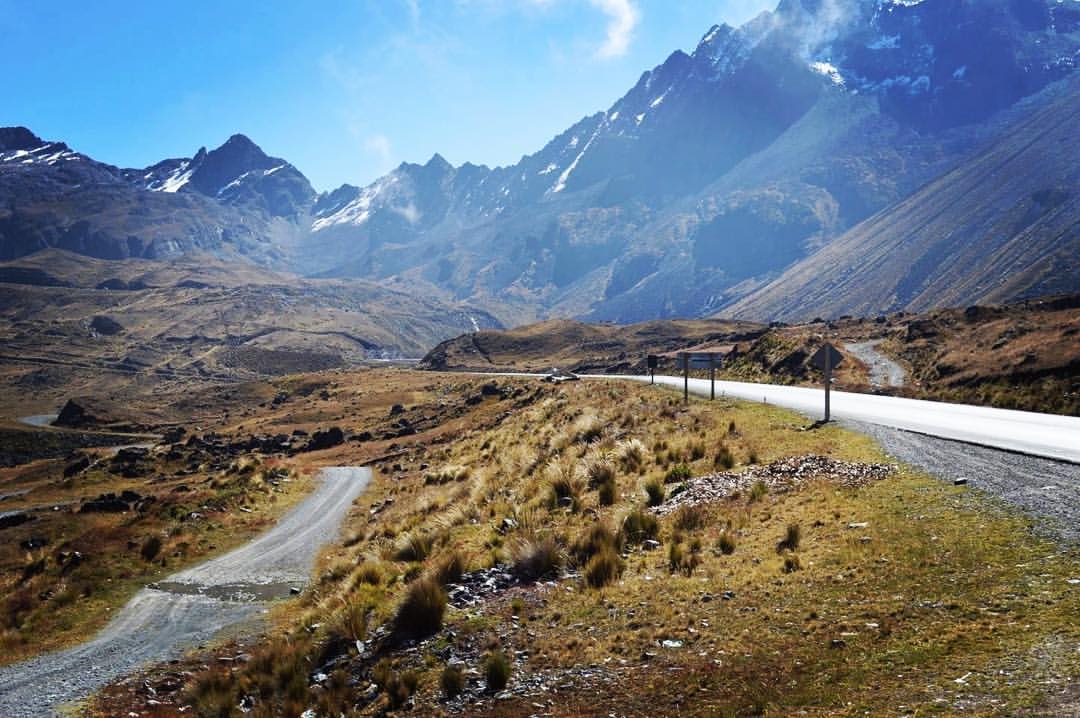
The ride is broken into two parts: a warm-up along 22 km of paved road, then the terrifying ride along 33 km of narrow gravel road.
Before setting off, we took a sip of alcohol after offering a drop to “Pachamama” (Mother Earth), and poured some on our front wheels to get us to our destination alive, where we would be awarded a Death Road Survivor T-shirt.
Part one: the paved road
This is where you have time to warm up and get a feel for the bike. As we pedalled down the gently winding, smooth road, one guide rode behind us and another in front to make sure everyone was under control. We stopped every 5–8 km to check that everyone was faring well.
At a checkpoint we paid 50 Bolivianos to the local community for access to the world’s most dangerous road. We then got back on the bus for a 30-minute uphill ride to the start of the Death Road.
Part two: the Death Road
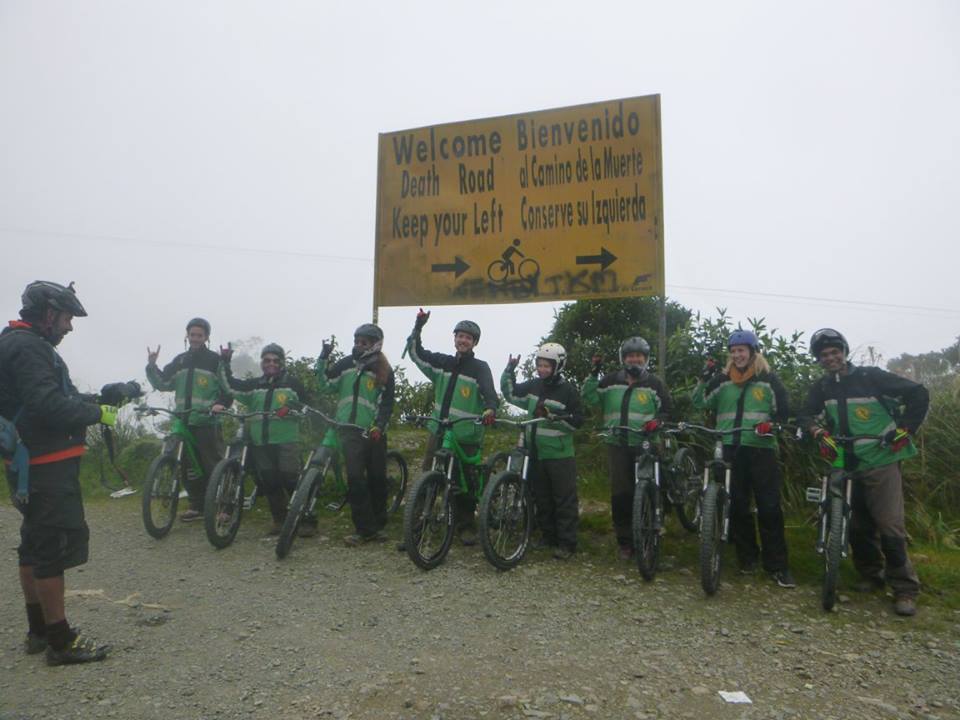
The bus pulled over next to a giant yellow board reading “Bienvenido a Camino Muerte” (Welcome to the Death Road). Our guide went over all the ins and outs of the road, the dos and don’ts and the rules, along with a few scary stories!
We then braced ourselves and started skittering down the road in single file, again with one guide behind and another in front. We stopped regularly to make sure the bikes were working and to take pictures along the way.
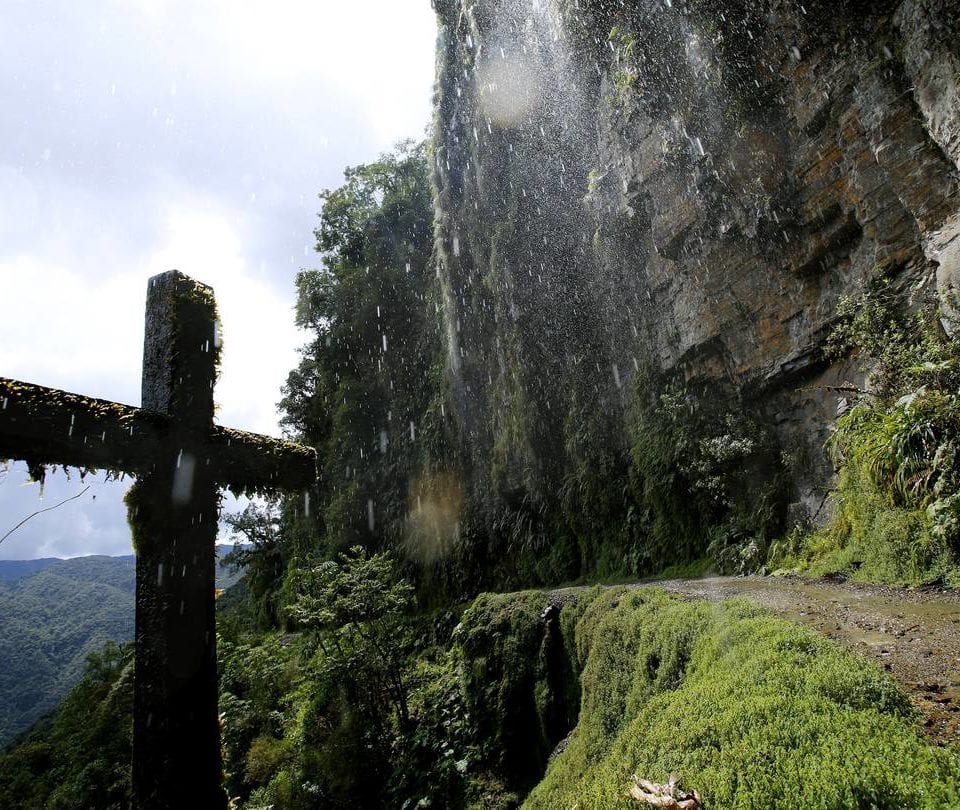
Just as we were becoming more confident and comfortable, we reached a stretch of road lined with crosses and memorials to the people who have fallen.
The descent from La Cumbre Pass (4,650 metres) ends in the jungle town of Coroico (1,200 metres), an incredible drop of 3,450 metres. At the end we reached a restaurant with a swimming pool, where we proudly put on our “Death Road Survivor” T-shirts and enjoyed a lavish meal before driving back to La Paz.


How safe is the Death Road?
Most of the rock-filled, pot-holed road is no wider than 3 metres, and the hazards include constant fog, tropical rain, the occasional waterfall, loose gravel, limited visibility and extreme drop-offs. At least 18 cyclists have died since 1998, but the ride is safe with a good operator.
Choose gear that fits you properly and, most importantly, follow the instructions of your tour leader. As the saying goes, “It’s better to be safe than sorry”.
Death Road survival tips
- Go at your own speed; it isn’t a race.
- Don’t wear a heavy backpack, as it can throw you off balance around corners.
- Carry sunglasses, as it can be quite windy during the ride.
- Snacks are provided, but bring some of your own too.
- Always pass on the right and call out when you are doing so.

Frequently Asked Questions
How long is the Death Road bike ride?
Our ride was split into a 22 km paved warm-up and 33 km of narrow gravel road on the Death Road itself, descending from La Cumbre to Coroico.
Is it safe to cycle the Death Road?
At least 18 cyclists have died since 1998, but with a good operator, well-fitting gear and by following your guide’s instructions, the ride is safe.
Is there an entry fee for the Death Road?
Yes. We paid 50 Bolivianos to the local community at a checkpoint to access the road.
Conclusion
Commitment beat fear. From the roadblock detour and the Pachamama toast to that hard-earned survivor T-shirt, the Death Road experience was unforgettable. Pick a reputable operator, ride at your own pace and you’ll come away with a story of your own.
Like It? Pin It.



Looks incredibly memorable for you one day when you look back!!
Oh God, this is really risky. It reminds me of certain dangerous high altitude passes in India. But no matter how much risky these paths are, they always find takers. Being an adventurous traveler, I would love to try it too.
This is one challenging and scary experience alright. And kudos to you for having done this. I would be following your Travel Tips to the T for this one . I definitely do not want to risk not listening to people on this one
What an incredible experience! I was amazed at your adventure. That’s The Death Road. My heart will be in my mouth as I ride on that road. Thanks for your post and beautiful photos. They are wonderful.
Wow, good for you, what an experience! I can imagine that going at your own pace and staying within your own comfort zone is the important for staying safe on the ride.
Omg! That sounds like a great experience and a big achievement too. The trail looks risky but with the proper gear, guidance and going at your own pace, one can do it. Your post has motivated me to start back cycling. Thanks.
The ride and the read are thrilling. Of course I only experienced the read. Knowing that the trail is risky and people have died adds that bit of extra thrill. However ensuring all safety measures have been taken nullifies the risks to some extent. At the end of the day it sounds like an enjoyable experience.
Wow! Looks incredible! What an adventure. I’d love to do that! Great post! The photos look incredible.
That is quite an adventure! Looking at the photos of this trail, I can tell why it is called The Death Road. Just glad to know you survived it though!
Wow..great job there. You must have a lot of stamina to be able to cycle through such a terrain. And I can clearly see why it’s called the death road. Thumbs up to you for taking the ride.
Wow, what an experience, the views look amazing. I don’t think I’d have the courage to do this, I am not a fan of that kind of risk-driven adrenalin, but I can totally see why you would want to do this and why so many do it. Good advice to pick a reputable operator.
OMG sounds so great! You guys must be so brave cuz that road seems to be rough and has many slopes. Btw It’ll be interesting if we follow the rules and find a trustworthy operator like Barracuda Biking right? Love adventures so much and hope I’ll have chance to experience this!
Eek! I’m not sure if I could do this or not. I feel like I’ve passed the point in my life of traveling on really risky roads, but maybe if I went slowly on a bike…? I don’t know. It’s interesting to get your first person perspective on this experience though. I’m sure it will help people decide. As for me, if I find myself in Bolivia, then I’ll be sure to come back and revisit your post! 🙂
Hi Sreeram,
I always enjoy reading your posts. They take me to the places that I always wanted to visit but ….
The Death Road Experience was gripping. I felt like I was there too, fighting my vertigo.
All the best,
Percy
Nice to know that Percy. I am glad that you enjoy reading them. 🙂