

Guide To Colonia Del Sacramento
Quick answer: Colonia Del Sacramento is a historic town on the Río de la Plata, near the mouth of the Uruguay River, and one of the most visited towns in Uruguay thanks to its rich history and tranquil cobblestone streets. This guide to Colonia Del Sacramento covers how to get there, what to see, and where to eat and sleep; two days is enough to visit the major attractions.
Many travellers stop for a day in Colonia while travelling between Buenos Aires and Montevideo, but the town rewards a slower visit.
Getting to Colonia Del Sacramento
- From Montevideo: Frequent buses run from the capital. Click here to check prices and schedules.
- From Buenos Aires: Colonia is accessible by ferry across the Río de la Plata.

Getting Around
There is no better way to explore the town than on foot, wandering through the cobblestone streets.
What to See in Colonia Del Sacramento
Two days in town gives you enough time to visit the major attractions.
The Historic Quarter
The historic quarter is one of Uruguay’s most treasured heritage sites. Its narrow alleys are paved entirely in cobblestones with a drainage channel down the middle, no pavements, and are lined on both sides with old mud and stone houses.
Colonia was recognised as a UNESCO World Heritage Site in 1995 because of this quarter. Don’t miss the town’s most famous and widely photographed street, “La Calle de los Suspiros” (Street of Sighs).
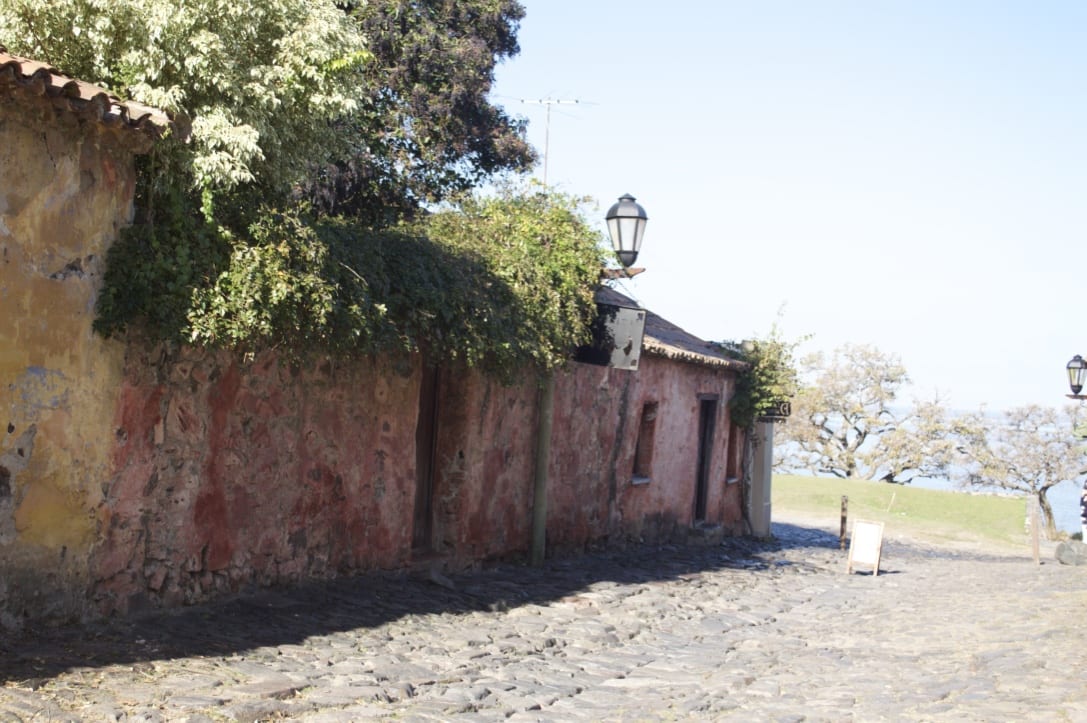
Puerta De la Ciudadela
Also known as the Portón de Campo, the “Citadel Gate” was one of the entrances to the city during Portuguese rule. Together with the remains of the former wall and a wooden drawbridge over a moat, it forms a notable centre of historical and architectural interest.
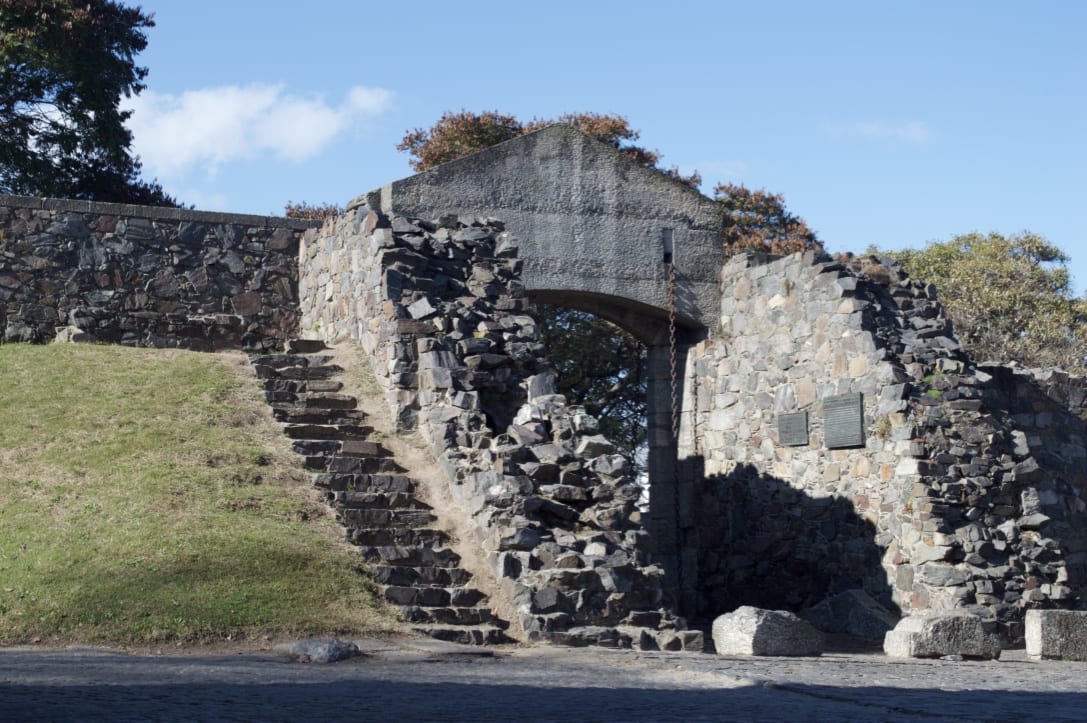
Ruins and El Faro (The Lighthouse)
The lighthouse was built in 1857. Its distinctive structure has a square base and a cylindrical tower rising to the lantern, and it was assembled on one of the ancient towers of the Convent of San Francisco, whose ruins lie at its foot.
Centro Cultural Bastión Del Carmen
Built in 1880, this building served as a glue and soap factory, a wool laundry and a tannery before becoming a cultural centre.
Museums in Colonia
- Portuguese Museum: One of the most renowned museums in town, exhibiting replicas of Portuguese furniture and uniforms worn by Portuguese troops. It is housed in a typical 18th-century Portuguese house with stone walls and tiled floors.
- Tile Museum: A collection of Portuguese, French and Spanish tiles, plus the first tiles made in Uruguay, all from the 1849–1900 period.
- Indigenous Museum: Exhibits pieces belonging to the Charrúa indigenous people and other tribes of the region.
- Spanish Museum (Museo Español): Pieces and stories covering the most important events in Colonia’s history, plus contemporary paintings by José Páez Vilaró.
Where to Eat
- Churana: Known for its flavoursome dishes. Misiones de los Tapes 41, Col Del Sacramento, Uruguay.
- El Buen Suspiro: Known for its wines. 90, Calle de los Suspiros, Col Del Sacramento, Uruguay.
- Meson de la Plaza: Delicious food with an amazing view. Vasconcellos 153, Col Del Sacramento, Colonia, Uruguay.
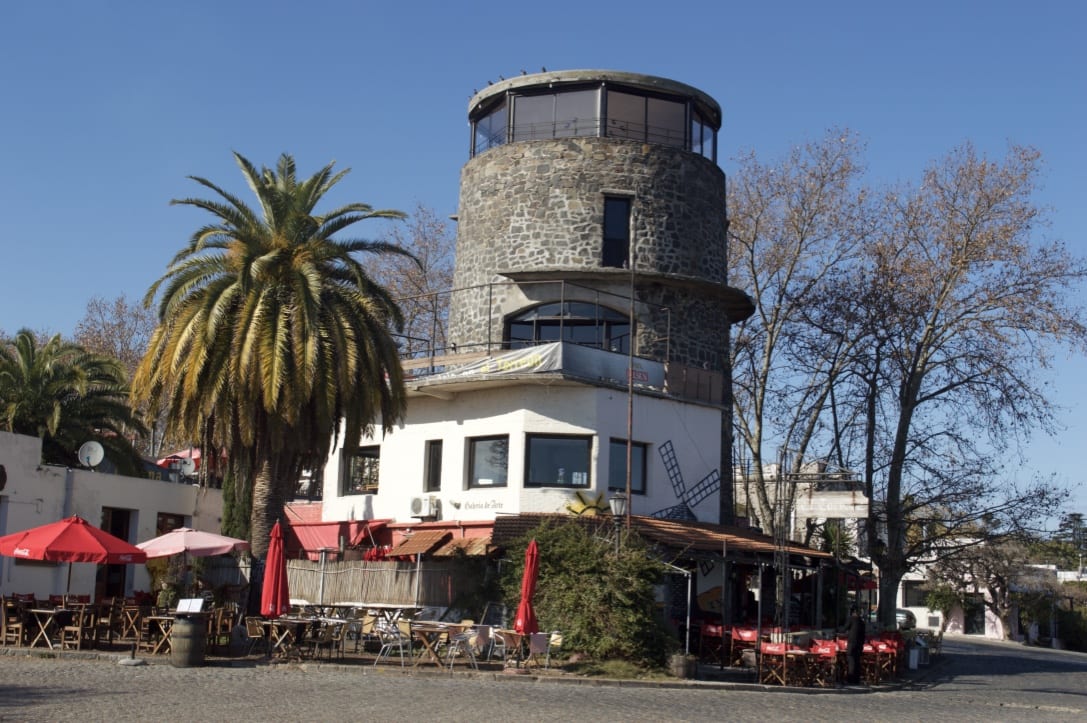
- El Torreon: Once a mill, now a great spot to relax with a beer and watch the sun set over the Río de la Plata. De San Pedro, Col Del Sacramento, Colonia, Uruguay.
Where to Sleep in Colonia Del Sacramento
| Hostel | Dorm price | Address |
|---|---|---|
| Hostel Bon Voyage (one of the best) | From USD 11.78 | Avenida 18 de Julio, Colonia del Sacramento |
| Celestino Hostel B&B | USD 13.58 | 18 de Julio 380, Colonia del Sacramento |
| Hostel El Español | USD 12.71 | Manuel Lobo 377, Lavalleja e Intendente Suarez, Colonia del Sacramento |
| Hostel Colonia | USD 17 | Gral. Flores 440 (entre Lavalleja y Alberto Méndez), Colonia del Sacramento |
Frequently Asked Questions
How many days do you need in Colonia Del Sacramento?
Two days is enough to visit the major attractions, though many travellers see the highlights on a day trip between Buenos Aires and Montevideo.
How do you get to Colonia from Buenos Aires?
Colonia is reached from Buenos Aires by ferry. From Montevideo there are frequent buses.
Why is Colonia Del Sacramento a UNESCO World Heritage Site?
Its historic quarter, with cobblestone alleys and old mud and stone houses, earned it UNESCO recognition in 1995.
Conclusion
With its cobblestone lanes, Portuguese-era gate, lighthouse and small museums, Colonia Del Sacramento is one of Uruguay’s most rewarding stops. Explore it on foot, catch the sunset over the Río de la Plata and give it two unhurried days if you can.




Never been to Colonia Del Sacramento. Looks like quite an interesting place to visit, got a bit of a vintage look. Great guide!
I never been to this part of the world and would love to visit Uruguay someday. Pebble stones and the street reminds me of the century old city here in the Philippines called Vigan. Very informative article 🙂
I may have an opportunity to visit this area in a few months and my interest is officially piqued! It looks incredible!
I love reading guides on places that are a little off the beaten path. Thanks for the helpful info – I’ll be saving it for my eventual South America trip! 🙂
The place looks quite interesting and definitely worth visiting, I would particularly be interested in the museums and walking around the town and understanding the culture of the place.
This is SUCH a great guide to Colonia Del Sacramento! I love how you broke everything down so clearly for us. I’ve only been to Uruguay once – only to Punta Del Este – and for just a day, but I would love to go back and see more of the country. GREAT post!
So looking forward to visiting Uruguay next year. Will keep this for future reference.
The title of your post got me all excited. I’ve been to Sacramento, California, and thought it was about that. And then I realized it is about Uruguay! That is even better, as I’ve not yet been to Uruguay, but would love to visit. Thanks for the fantastic photos.
Great Post. You rarely hear about Uruguay. Great to discover this hidden marvel.
keep rocking – TT
This seems like a great place en route to or from Buenous Aires. It’s always nice to have a guide for the in between places like this. Thanks for the information!
We spent a couple of days here, and it was certainly a much nicer pace to visit than the few day trippers we saw ducking across from Buenos Aires.
That said, our visit was also the middle of winter, so it was a pretty quiet time of year (we enjoyed it that way).
There is also a pretty decent micro-brewery in town as well 😉