Potosi Mine Tour
Quick answer: A Potosi mine tour takes you inside the working Cerro Rico mines with an ex-miner as your guide. My tour with El Mascaron Tours took 4–5 hours, cost 100 Bolivianos and included the Miners’ Market, full miner’s gear, a viewpoint over the city and a visit to the shrine of El Tio deep inside the mountain.
Potosi and Cerro Rico: A Brief Background
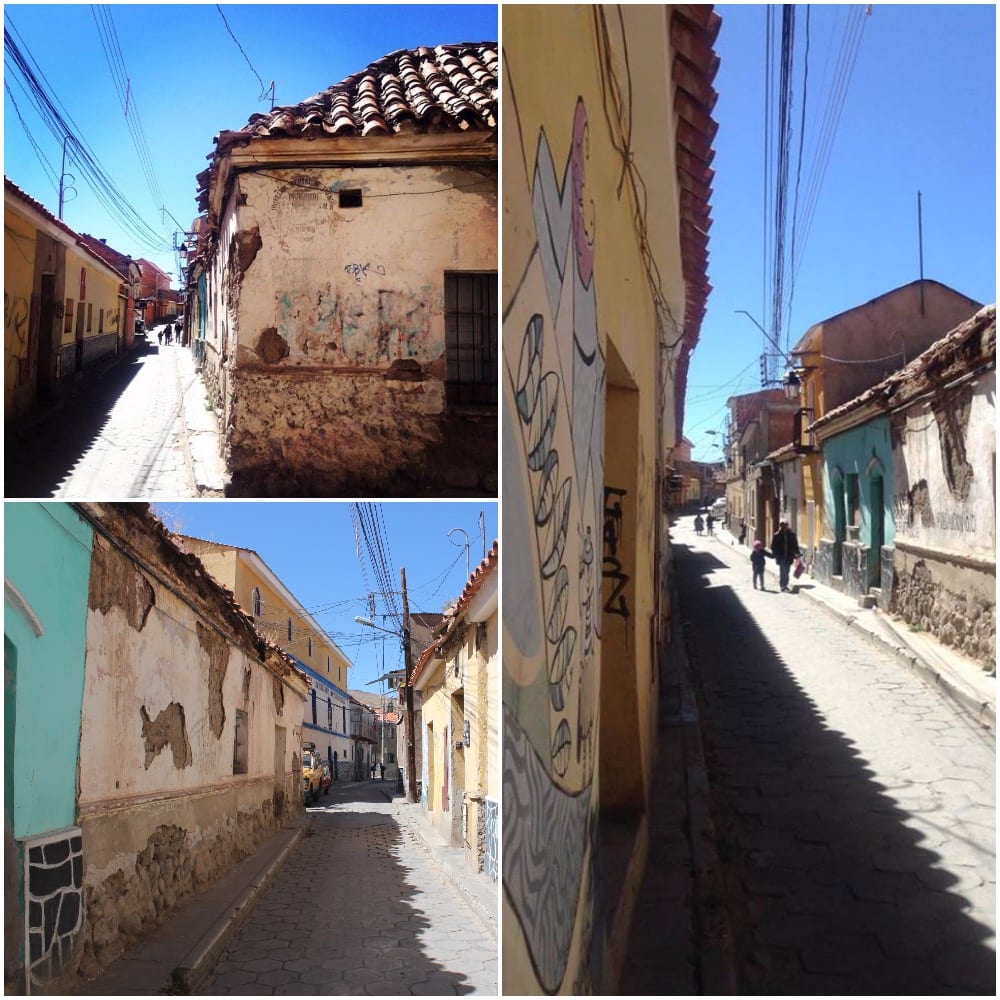
Potosi is a rough environment: the sun shines brightly during the day, and a bitterly cold night rolls in at dusk. At 4,090 metres (13,420 ft) above sea level, it is one of the highest cities in the world. The main attraction is Cerro Rico (the “rich hill”), which rises to 4,824 metres above sea level.
This dilapidated city was once one of the richest in the world. Potosi began booming in 1545 after silver reserves were discovered in Cerro Rico. The silver was mined between the 16th and 18th centuries and largely benefited the Spanish Empire.
Although the silver boom ended at the turn of the 19th century, mining is still the main source of income in Potosi. Miners extract silver on a small scale, as well as tin, zinc, lead, antimony and wolfram.
Working Conditions in the Potosi Mines
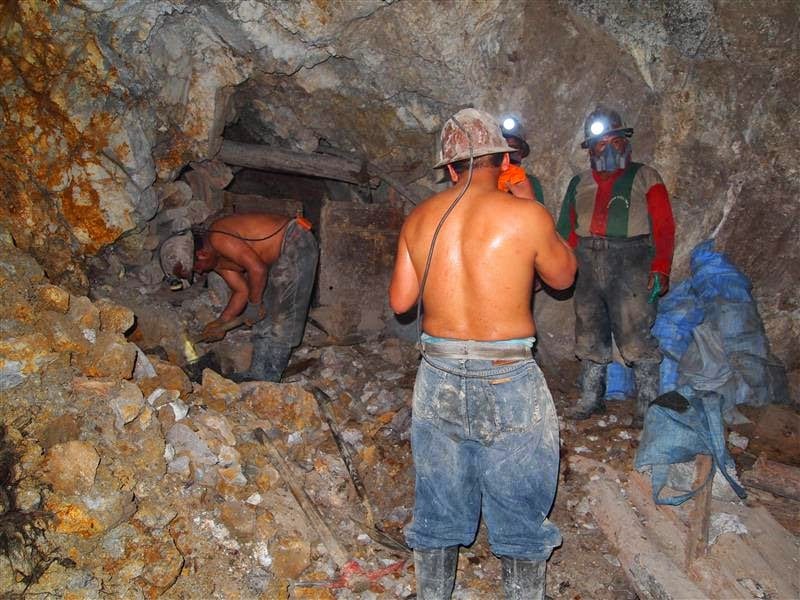
Around 28,000 miners work daily in frightful conditions, scraping out whatever ore deposits they can. Most of the work is done by hand, and it is still very dangerous.
- Around 35 miners die every year, mostly from gas explosions or falling rocks.
- Some succumb to silicosis pneumonia within ten years of entering the mines.
- Boys as young as ten work there, which is a heartbreaking thought.

The Potosi Mine Tour: What to Expect
Many tour companies around Potosi’s main square offer mine tours twice a day. I booked mine with El Mascaron Tours.
| Departures | Morning and afternoon |
| Duration | 4–5 hours |
| Price | 100 Bolivianos |
| Guide | An ex-miner |
Almost all tour companies follow the same pattern. Everyone gathers at the agency, where the guide, an ex-miner, starts the tour.
The Miners’ Market
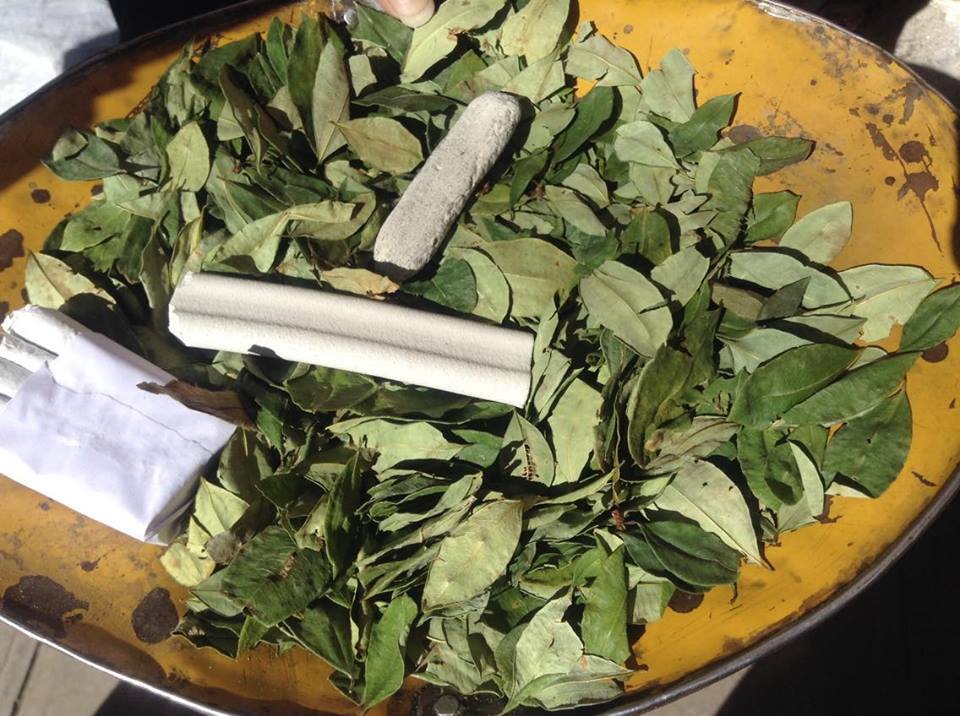
Our first stop was the “Miners’ Market”, where miners buy all the supplies they need. The guide explained how each product is used in their daily life: mainly coca leaves, cigarettes, “93%” alcohol, drinks and dynamite. Yes, even we could not believe that dynamite could be bought for 20 Bolivianos, less than 3 USD.
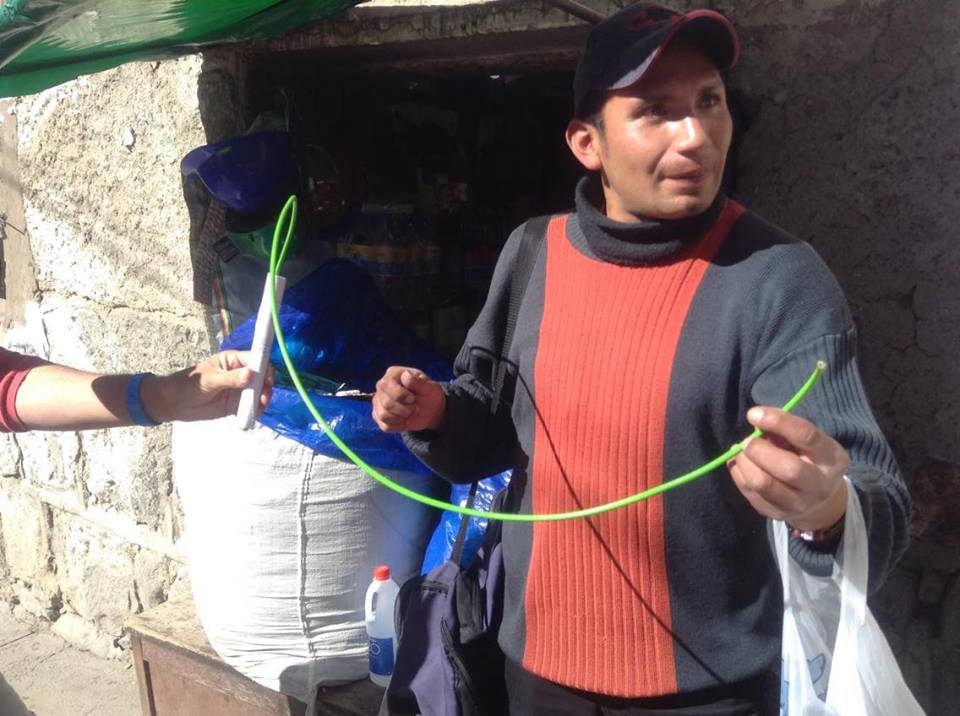
Our guide told us, “Miners work for themselves and have to buy everything they need by themselves“. To thank the miners we would meet, we were encouraged to buy a bag with a packet of cigarettes, coca leaves, a bottle of alcohol and a bottle of soft drink for 10 Bolivianos.
Gearing Up and the Cerro Rico Viewpoint
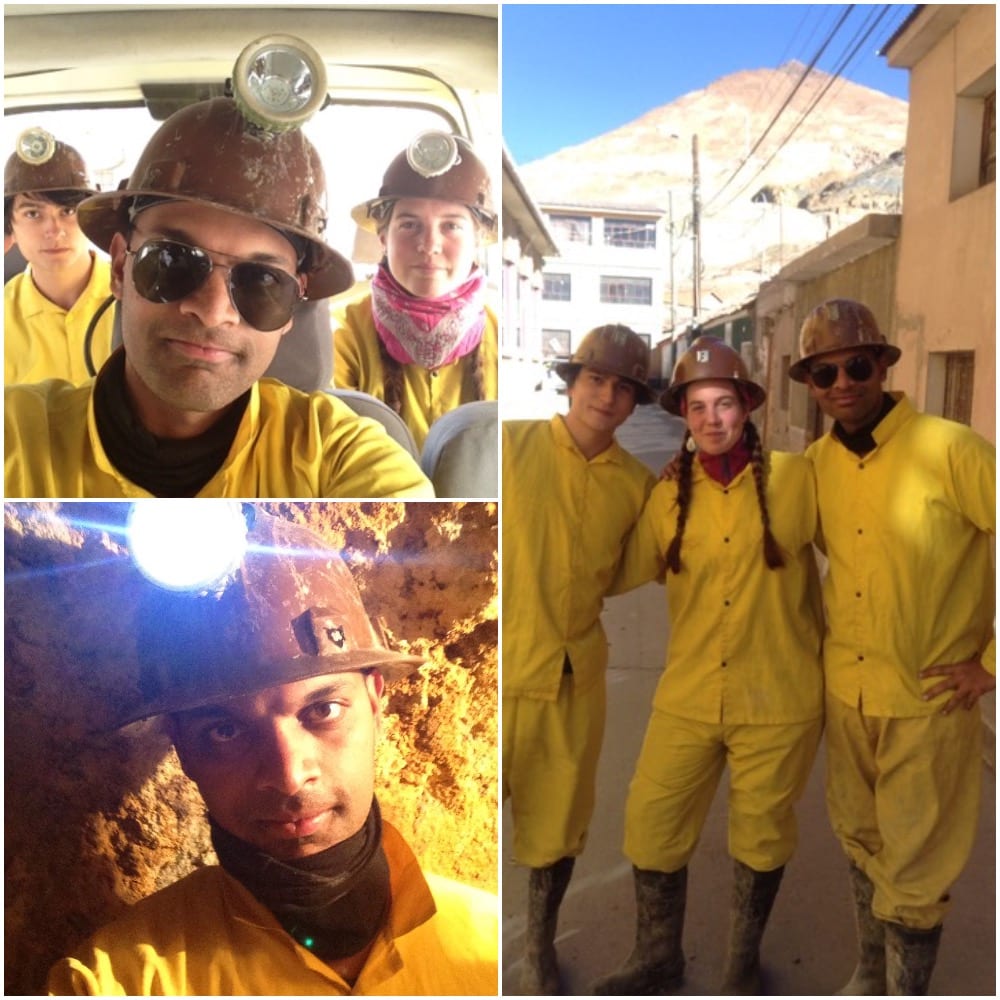
We then drove a few blocks to get kitted out in a yellow miner’s uniform, complete with helmet, headlamp and rubber boots.
Fully geared, we headed towards Cerro Rico. We stopped at a viewpoint for a glimpse of Potosi while our guide explained the miners’ routine and a little history, giving us a complete overview before we reached Potosi’s prime attraction.
Inside the Mine
Barely moments after entering the first mine shaft, we were scrambling against the walls of the narrow tunnel to avoid a rail cart full of ore hurtling towards us in the dark.
Meeting El Tio
Puffing through the narrow tunnel, we paused at the shrine of El Tio (The Uncle), the god of the underworld. On every level, in a relatively quiet, tucked-away spot, there is a shrine to El Tio. To have good luck in the mines, miners bring him many gifts and offerings.
To honour El Tio, each of us took a shot of the 93% alcohol diluted with tea and chewed coca leaves. Before each shot, we poured a drop on the ground for El Tio and Pachamama (Mother Earth). By the end of our session, we had drunk six rounds of shots in his honour.
Afterwards, we continued through the narrow tunnels, sharing our gifts and alcohol with the miners we met.

It was a sad sight to see people working in such horrific conditions simply because mining can earn them more money than the other jobs available in Bolivia.
Things to Consider Before Your Potosi Mine Tour
- It is best to acclimatise to the altitude for several days before attempting the tour.
- Carry a mask to cover your nose and mouth.
- If you suffer from claustrophobia, going down the mines is not advisable.
- The tour is physically challenging.
Frequently Asked Questions
How much does a Potosi mine tour cost?
My tour with El Mascaron Tours cost 100 Bolivianos, plus 10 Bolivianos for a gift bag for the miners.
How long is the Potosi mine tour?
It takes about 4–5 hours, with departures in the morning and afternoon.
Is the Potosi mine tour safe?
The mines are genuinely dangerous working environments. The tour is physically demanding, at high altitude and in narrow tunnels, so acclimatise first, bring a mask and skip it if you are claustrophobic.
Conclusion
The Potosi mine tour is not a comfortable experience, but it is an unforgettable and eye-opening look at the history of Cerro Rico and the lives of the people who still work inside it. Go prepared, respect the miners and take the time to understand what you are seeing.
This tour was organised by El Mascaron Tours: elmascarontours@yahoo.com



This is the first time I read about a mine tour experience. The thought of children working is quite heart breaking though. All the photos do justice with the experience! Excellent work!
Great tours! Thanks for the advice. Your photos are really beautiful. The shots of the city are great!
This is quite an intriguing experience. It is sad the miners have to put up with so much pain to earn their living. The picture of El Tio looks interesting.
A tour of the mines is really exciting. Reading your post brought back childhood memories of a visit to a gold mine. Still remember the descent into the underground in a lift that seemed to go on and on.
I have been in caves but never a mining one. It sure does seem enthralling but at the same time, I feel sad for those miners. Maybe I should try this to know what it really means for them. Glad you did too and shared it with us.
what a cool experience this must have been! thanks for this, ill have to save this in case I am ever in that area!
The condition of those who work in mine is more or less same across the world. It’s a pity not enough steps are being taken to safeguard their welfare. The most urgent need of the hour is to ban kids from working in these mines.
Yikes! I would definitely not be one to take the mine tour as I don’t appreciate dark places. I would, though, enjoy exploring Bolivia at some point, as they grow some very fine cocoa.
Wow. Thats some place! Minin at 4000 meters plus!